Custom Bookends Manufacturer – Acrylic & Cold-Rolled Steel, Logo Print or Engraving, 1 pc MOQ
Custom bookends in 3 mm clear acrylic or 1.2-1.5 mm cold-rolled steel, with logo printing, engraving and telescopic widths. 1 pc MOQ, free proof.
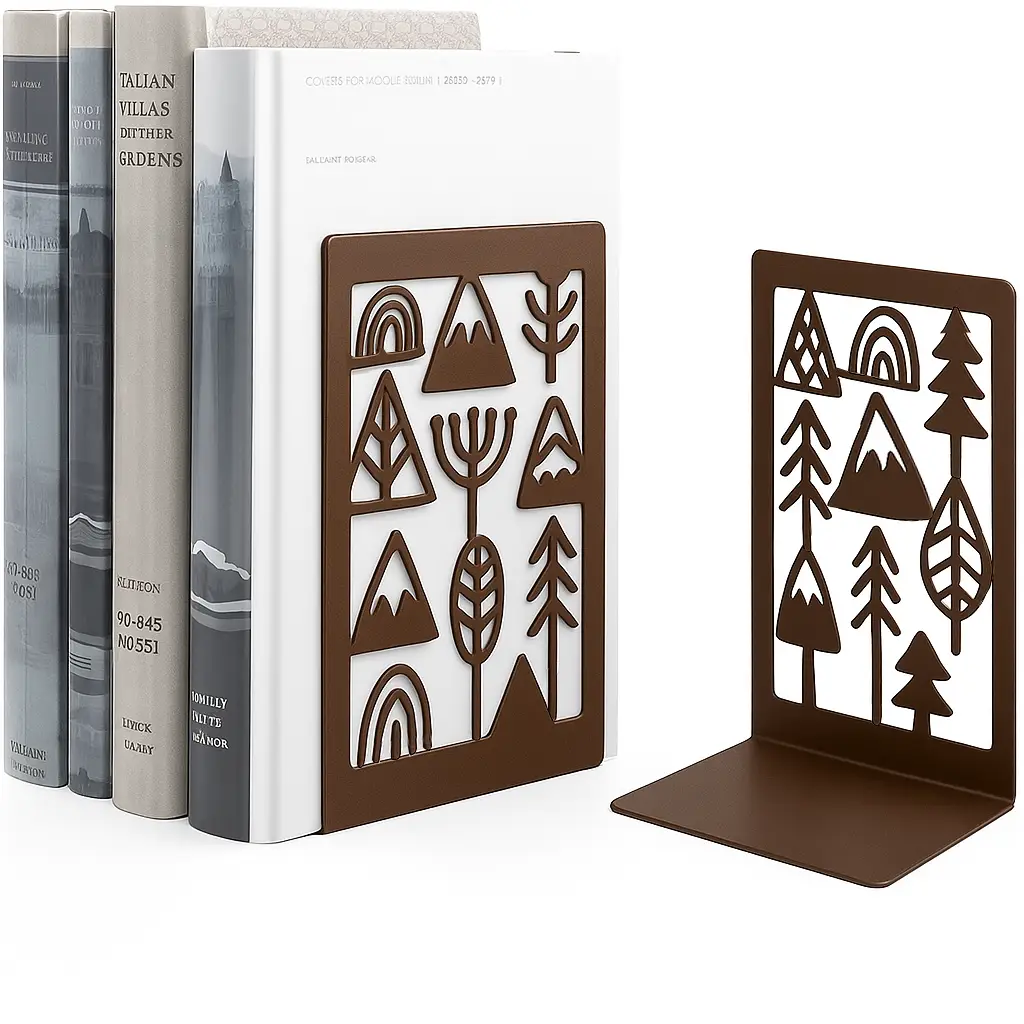
Custom Bookends with Your Logo — Acrylic and Steel
Yichi is a custom bookend manufacturer in Zhejiang, China, producing two distinct ranges under one roof: clear acrylic bookends in 3 mm and 5 mm sheet — A4, A5 and A6 formats, folded or square edge — and cold-rolled steel bookends in 1.2 mm and 1.5 mm plate, including telescopic and divided versions. Artwork goes on by PVC crystal decal, direct print, laser engraving or silk screen. Send a logo, a photograph, an illustration or a shelf plan and we return a free effect preview before anything is cut. A one-piece minimum, samples in 1-3 days and production in 2-10 days apply across both ranges.
A bookend is one of the few promotional objects that does a job. It is not read once and put down; it holds weight every day, on a shelf that someone else also looks at. That is why the two questions buyers actually ask are not about colour — they are about which sheet thickness carries the load, and whether the finish survives being slid along a shelf. Both answers live in the material choice, so the specification below is split by material rather than by size.
Acrylic Bookends or Steel Bookends — Which Fits the Job
The two ranges are not interchangeable, and the deciding question is whether the bookend is meant to be seen or not.
Choose acrylic when the bookend is part of the presentation: a retail counter, a bookshop shelf, a hotel reading corner, a corporate gift where the piece carries a logo on an open face. Clear acrylic puts the artwork in the foreground and disappears at the edges. It is also the right choice when the artwork itself is the product — a portrait, an illustration, a set of two images that belong together.
Choose steel when the brief is load and longevity: library stacks, archive rooms, office bookshelves, a reading room where nobody looks at the bookend. Cold-rolled steel plate of 1.2 mm or 1.5 mm holds heavy hardbacks upright without flexing, and the finish is designed to be wiped rather than handled carefully.
A further consideration is packing and freight. Acrylic is the lighter of the two and travels flat, which is the reason it is normally the cheaper option to ship on large orders. Steel is denser and the weight is concentrated in a small footprint, so a steel programme is priced and packed differently.
Acrylic Bookends: Sheet, Edge and Optical Clarity
The acrylic range is cut from cast sheet and finished on the edges. Three sheet gauges are produced across the range — 3 mm as standard, a 5 mm heavy version, and thinner sections on the smaller A6 pieces — and the material is fully transparent rather than tinted.
Clarity is the specification that matters. Clear acrylic transmits up to about 95% of visible light, against roughly 70% for ordinary industrial plastic sheet. In use that difference is not a number, it is whether the books behind the bookend look slightly grey or look like books. It is the single most visible quality gap between a properly specified bookend and a cheap one, and it is worth asking about before price.
Sheet thickness carries the load. Thicker sheet resists bowing under a full shelf, which is why the heavier items are specified at 3 mm and above rather than at the 2 mm common in low-cost display stands. A bookend that bows slowly over months is the most common complaint in this category, and it is decided at the moment the sheet gauge is chosen.
Edge treatment. Edges are polished, and the folded versions are bent so the sheet stands square to the shelf without a separate foot. Folded and square-edge formats are both produced, and the choice is usually made by the shelf height available.
Protective film. Every acrylic piece ships with a protective film on both faces. It is there to stop transit scuffs, and it is removed by the buyer before use — the panel underneath is the finished surface. The film is not a coating; leaving it on is the most common reason a first sample is described as looking dull.
Steel Bookends: The Three-Layer Finish
Steel bookends are made from cold-rolled steel plate and finished in three stages rather than painted in one.
- Acid pickling — the plate is descaled before anything is applied. This is the step that removes the mill scale and surface contaminants which otherwise become the starting point for rust.
- Electrostatic powder coating — dry powder is applied electrostatically and cured, so it bonds to the prepared steel rather than sitting on top of it. The practical result is a finish that resists chipping and does not lift when the bookend is slid across a shelf.
- Clear top layer — a final coat seals the colour and evens out the surface.
The colour range is produced in this finish: yellow, light blue, deep red, blue, green, dark blue, red and black, alongside a set of softer decorative shades — pearl white, wild green, taro purple, sky blue, night black and misty blue — used mainly on the decorative twelve-piece packs.
Base detail. Steel bookends sit on pads rather than directly on the shelf. EVA foot pads under the base stop the unit sliding and stop the shelf surface being scratched; a T-shaped base with foam feet is used on some formats for the same reason, and riveted silicone pads are used on the telescopic version to cut noise and resist wear as the width is adjusted. In practice this is the difference between a bookend that stays where it is put and one that needs repositioning after every book.
Edge and corner work. Corners are radiused rather than square-cut so the piece can be picked up without catching a finger, and the load-bearing edges are formed rather than welded.
Telescopic and Divided Bookends
Two steel configurations solve problems that a fixed bookend cannot.
Telescopic bookends run on a slide that extends from about 10 cm to 50 cm, so one unit replaces a row of fixed pairs. A single body then holds a short run of paperbacks or a long run of hardbacks at the same setting. The telescopic body is produced from 0.9 mm plate with the slide braced internally; the format is used where the number of books in a bay changes — a reading room, a school library, a bookshop display that is re-merchandised. Overall dimensions are in the specification table below.
Divided bookends use internal separators rather than a single flat face, so one unit both supports the row and splits it into sections. Buyers use this where books are grouped rather than merely held — by subject, by size, by reading level — and the divider pattern is what lets a shelf be reorganised without moving the bookends themselves.
Both formats are also made in the L-shape and J-shape plain versions, where the plate folds underneath the books instead of behind them and the width can be opened or closed by hand.
Book Display Stands and Retail Shelf Props
Beyond the load-bearing ranges, the same acrylic sheet is used to make display formats for books rather than just supports for them.
Single-sided and double-sided display stands hold books face-out or cover-out at an angled presentation, which is the format used for new releases and for titles where the cover is the selling point. Double-sided units serve two aisles or two rows from one body.
No-back-panel and with-back-panel variants are both produced: the open version leaves the book cover unobstructed across its full width and takes wide-format titles that a framed stand would crop, while the panelled version holds thinner books square.
Step and tier formats present a run of titles at increasing heights so that spines and covers read as a sequence — the arrangement used for a magazine rack, a stationery counter or a display of a publisher’s list.
Formats produced in this family include A4, A5 and A6 with either a folded edge or a square edge, the A-series with and without a back panel, double-sided panelled versions, a J-shape mid size and a 6.2 mid size. Because these are display pieces rather than load bearers, sheet gauge matters less here than the panel height and the angle.
Printing on Bookends: PVC Crystal Decal or Direct Print
Three marking routes are used, and the choice depends on how the artwork will be treated.
PVC crystal decal — a high-clarity laminated film applied to the bookend face. It is the route for photographic artwork, portrait work, illustration, gradients and anything with fine internal detail, and it is the route that keeps the sharpest definition on a panel. Because it is a film, it can later be removed and replaced, which is how a bookend gets a second life when a campaign changes. It is waterproof and moisture resistant, and the printed colour does not fade in ordinary indoor use. Two different decals can be applied to one bookend, or to the two faces of a pair.
Direct print — the image is applied onto the panel itself. The result is permanent and cannot be swapped afterwards; it is the right route where the design will never change and a film edge is not wanted.
Laser engraving and silk screen — engraving removes material to leave a permanent mark in the surface and is used for logos, text and serial marks where the finish must not wear. Silk screen is used for single-colour logos and repeat marks on steel bodies, including the coloured powder-coated ranges.
For steel bookends the marking goes onto the powder-coated surface, so the recommendation is the same across both materials: send a vector file for logos and text, and a high-resolution image for photographic work.
Specifications
| Item | Acrylic range | Steel range |
|---|---|---|
| Material | Cast clear acrylic sheet (PMMA), transparent | Cold-rolled steel plate |
| Sheet / plate thickness | 2 mm, 3 mm (standard), 5 mm | 0.9 mm (telescopic), 1.2 mm, 1.5 mm |
| Light transmission | Up to about 95% | Not applicable |
| Formats | A6 small, A5 (150 x 150 x 30 mm), A4; folded edge and square edge | Large 150 x 200 x 230 mm (1.5 mm); small 150 x 170 x 230 mm (1.2 mm) |
| Style variants | A-series with and without back panel, double-sided panelled, J-shape mid, 6.2 mid, L-shape with and without panel | Divided (internal separators), telescopic slide, L-shape, J-shape |
| Telescopic range | Not applicable | 10 cm to 50 cm |
| Telescopic body dimensions | Not applicable | 19.5 cm x 10.5 cm x 15 cm; 19.2 cm x 10.5 cm x 15 cm |
| L-shape dimensions | Not applicable | 20.5 cm x 10.2 cm x 13.5 cm |
| Capacity | Approximately 70–80 books on the larger stands | Approximately 70 books on the divided large format |
| Colours | Transparent; coloured sheet on request | Yellow, light blue, deep red, blue, green, dark blue, red, black; pearl white, wild green, taro purple, sky blue, night black, misty blue |
| Marking routes | PVC crystal decal, direct print, laser engraving | Silk screen, laser engraving, decal |
| Base detail | Polished edge, folded or square foot | EVA foot pads, T-base with foam feet, riveted silicone pads on telescopic |
| Tolerances | Hand-measured, about 1–2 mm | Hand-measured, about 1–2 mm |
| Protection in transit | Protective film on both faces, removed before use | Powder-coated finish, packed to protect corners |
| MOQ | 1 pc | 1 pc |
| Sample time | 1-3 days | 1-3 days |
| Production time | 2-10 days | 2-10 days |
Artwork Requirements and Tolerances
Vector for logos and text. AI, PDF, EPS or CDR with text converted to curves. Vector artwork scales to any panel size without loss, which matters on the A4 display stands where a logo may be reproduced well above its original drawn size.
Raster for photographic work. JPG is accepted. Send the largest pixel dimensions available — resolution is what decides whether a portrait reads as a portrait on the finished panel. For the decal finish, portrait artwork at roughly a 3:4 ratio is the easiest to place because the sheet is cut to the panel.
Colour. Screen colour is RGB and shifts between monitors, so a printed panel cannot match an on-screen colour exactly. The working tolerance for the trade is a colour difference held within about 10%, and if a brand colour is critical, send the reference or a Pantone number and we will work to it.
Measurement. Both ranges are hand-measured. Acrylic sheet carries a cutting and forming tolerance of about 1–2 mm and steel parts are quoted within the same figure. Where a bookend has to sit inside a box, a shelf bay or a display recess, allow for that figure in the packaging design.
Preview. An effect preview is issued free of charge and production does not start until it has been confirmed.
Where Custom Bookends Get Used
Libraries and reading rooms. Divided and telescopic steel bookends in the load-bearing formats, usually unbranded or with a small engraved institutional mark. The requirement here is upright stability and a base that does not mark shelving.
Bookshops and stationery retail. Acrylic display stands and A4 or A5 acrylic bookends, where the panel carries a publisher logo, a shop name or a campaign image and the book cover is meant to stay visible.
Corporate and conference. Branded acrylic bookends presented with a book as a single gift — the bookend carries the logo, the book carries the message, and the pair works as one item on a desk afterwards.
Hotels, restaurants and showrooms. Acrylic display formats used as shelf props for menus, brochures and product literature, where the stand is part of the interior rather than a fixture.
Schools and universities. Steel bookends for classroom and library shelving, frequently screen printed with a house mark, and acrylic A5 pieces for subject displays.
Retail and brand promotion. Decorative twelve-piece packs in the softer colours, used by stationery brands and by buyers building a shelf-presence kit alongside other desk items.
How an Order Runs
- Send the brief. Product photos, the shelf or bay dimensions if the bookend has to fit a space, the quantity and the branding requirement.
- Confirm the route. We will recommend acrylic or steel, sheet or plate gauge, folded or square edge, and the marking method, based on how the piece will be used.
- Artwork and preview. Send a vector file or a high-resolution image. A free effect preview follows, and nothing is cut until it is approved.
- Sample. A one-piece sample runs in 1-3 days, which is the stage to check sheet clarity, plate gauge, edge finish and the base pads in the hand.
- Production. Bulk production runs in 2-10 days from confirmed artwork, packed with protective film on acrylic and corner protection on steel.
- Shipping and invoice. Export packing and documentation are arranged to the destination; a formal invoice is available on request.
Ready to see your logo on a bookend? Request a Quote with your artwork and the shelf or box dimensions, and we will return a free effect preview for both an acrylic and a steel option so the choice can be made against a picture rather than a description.
Why Order From Yichi
Both materials from one supplier. Acrylic cutting, bending and polishing and steel forming, pickling and powder coating are done in-house, so a programme that needs a display piece and a load-bearing piece does not have to be split across two vendors and two colour standards.
Material specified rather than described. Sheet gauge, plate thickness, transmission and finish stages are all stated, which is what makes a quote comparable. Cheap bookends are cheap because sheet is thin — the specification table above is the place to check that.
A one-piece minimum. One piece is enough to approve a finish, which is how a library, a bookshop or a marketing team tests clarity, colour and edge quality before committing to a shelf.
Branding routes matched to use. Decal where the artwork will change or must stay photographic; direct print where it will not; engraving where the mark must never wear. The recommendation follows the object’s life, not the price list.
Free preview before production. Because a custom bookend cannot be resold, the preview stage does the work that a returns policy cannot. Use it — including on a single unit.
Browse the rest of the promotional gifts range, or send a shelf plan and we will come back with a size and gauge recommendation.
Frequently Asked Questions
What is the MOQ for custom bookends?
Should I choose acrylic or steel bookends?
Can the two sides carry different artwork?
What artwork do you need for a printed bookend?
Is the printed image permanent?
Are custom bookends returnable?
You May Also Need

Custom Printed Balloons – Free Design & Bulk
Custom printed balloons with free design & 1-on-1 support. MOQ of just 1. Silk-screen logo printing on 230 colors. CE-certified quality for promotions & events
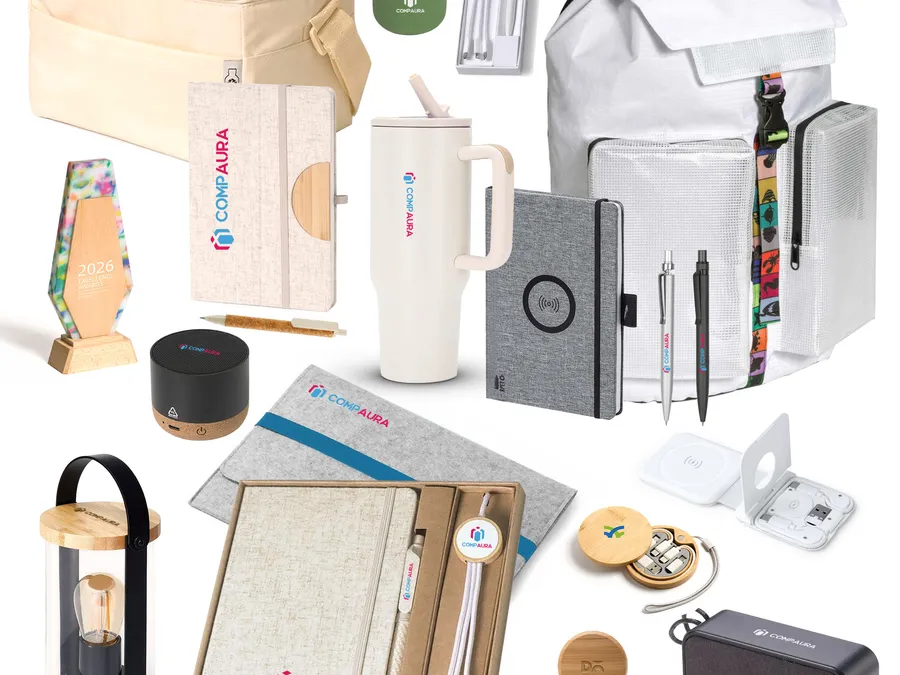
Business Gift Sets
Business gift sets and opening ceremony gifts with your logo — complete branded sets for corporate launches, anniversaries and holiday gifting.
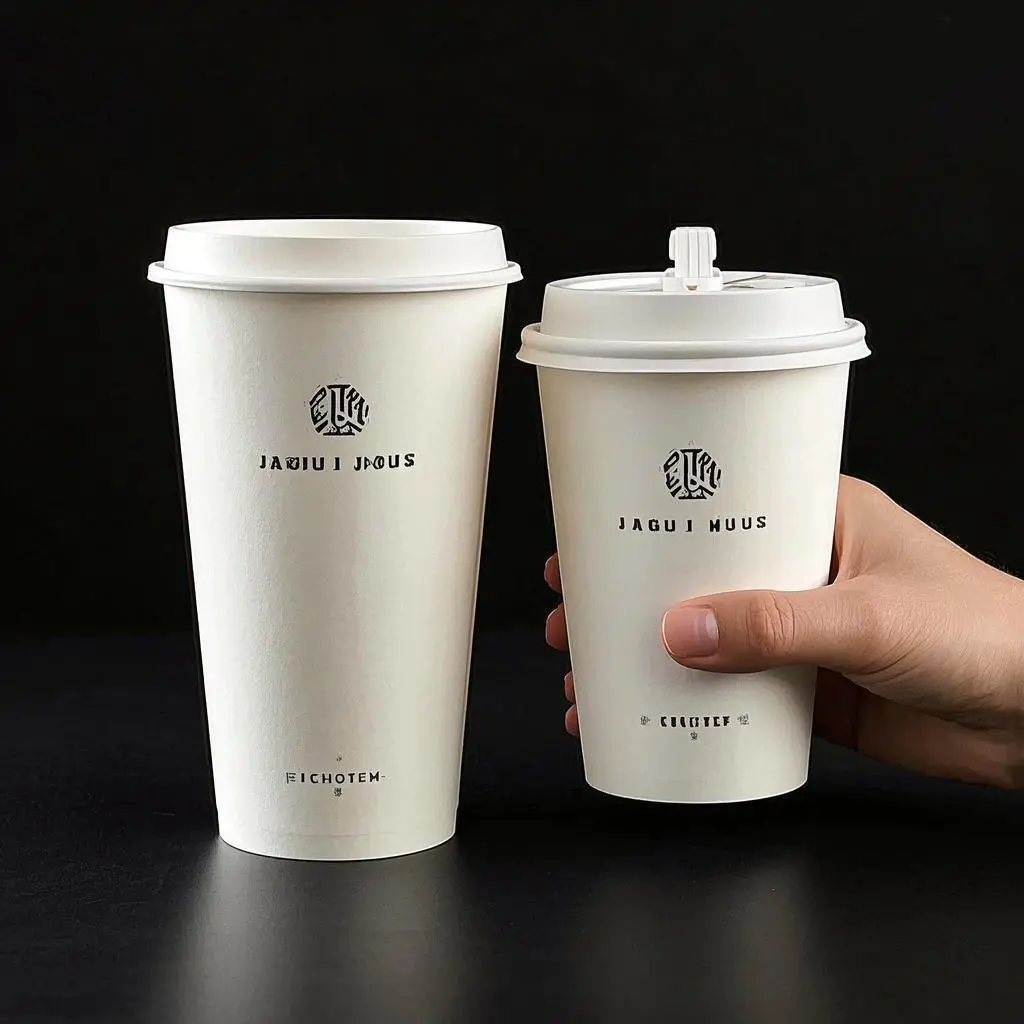
Custom Printed Coffee Cups | Branded Paper Cups with Logo
Custom printed coffee cups with your logo from just 1 piece—food-grade, hot/cold ready, free layout design and fast samples in 1-3 days.
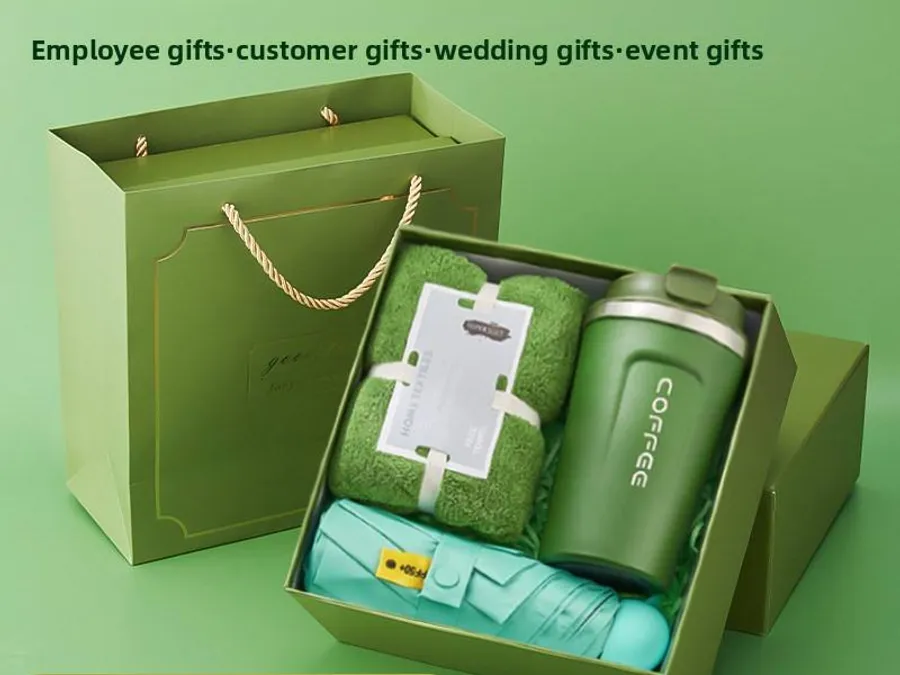
Corporate Gifts
Corporate gifts custom-made with your logo — USB drives, nail clipper sets, notebooks, mugs and more. One-stop corporate gift sourcing with low MOQ.