Custom Calculators Manufacturer – 12-Digit Solar Desk & Pocket Models, Pad Printed Logo, 1 pc MOQ
Custom calculators with pad printed logos — 12-digit displays, solar and dual-power models, voice and silent versions, desk and pocket sizes. 1 pc MOQ, free proof.
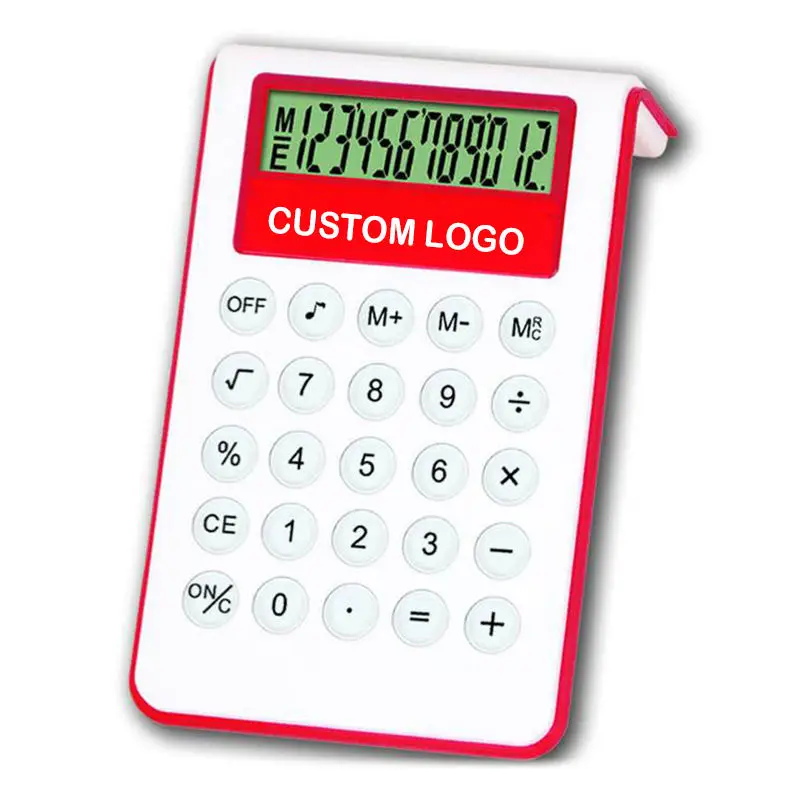
Custom Calculators with Your Logo — Pad Printed Desk Models
Yichi is a custom calculator manufacturer in Zhejiang, China, producing branded promotional calculators in ABS — 12-digit desk and pocket models, solar, battery and dual-power versions, voice and silent formats, with tilting displays, anti-slip feet and logos applied by pad printing. Cases run from compact pocket sizes up to full desk formats, and printed packaging carries the same logo. Send a logo file and we return a free effect preview before printing. A one-piece minimum, samples in 1-3 days and production in 2-10 days apply across the range.
A calculator is one of the few promotional items that earns its desk space every day. It also has an unusual property for a giveaway: the person using it is looking directly at where the brand sits, several times a day, in a context where they are concentrating. That is what makes it work — and it is also why the specification questions that matter are practical ones. A calculator that runs out of display places, or that needs a battery no one stocks, stops being used and stops carrying the logo.
Voice or Silent — Which Format Suits the Buyer
The voice option is a functional choice rather than a novelty, and it splits the range in two.
Voice models. Keystrokes and results are spoken aloud as they are entered. This is the format used in education, in accessibility settings and at reception or service desks where a figure has to be confirmed aloud to a customer. A voice model is also the more memorable giveaway, because the feature is audible and gets demonstrated.
Silent models. The standard office and finance format. A quiet keyboard is the requirement in an open-plan office, an audit room and any setting where a talking calculator would be a distraction.
Where the choice is made. The dividing question is who will use it and where. A calculator handed to a customer at a counter is a different instrument from one that sits on an accountant’s desk for eight hours, and the voice feature is the first thing to decide because it changes both the model and how the item is presented.
Other functional options. Music and alarm functions, time and date display, and a unit-conversion feature appear on the feature-led formats, and these are the versions used where the calculator is part of a gifting range rather than a working tool. They add features rather than accuracy, so they are worth specifying only where the extras will actually be used.
Digits, Display and Tilt: Reading a 12-Digit Screen
Twelve digits. The working standard for office, finance and accounting work. Twelve places hold figures far beyond an everyday calculation, which is what allows currency amounts, percentages, tax and running totals to be entered and accumulated without the display truncating. It is also the digit count that most business buyers specify by name, so it is worth stating on the product page rather than leaving to the photograph.
Display size and contrast. The larger formats pair a 12-digit capacity with an oversized screen, so the figure can be read at a glance rather than leaned towards. High-contrast numerals matter more than screen area on a calculator that is used for long sessions.
Tilted display. A tilted screen angles the digits towards the user’s eye rather than lying flat on the desk, which reduces the head movement needed to check an entry. On a desk model this is a comfort specification, not a design flourish — it is the difference between a calculator that is checked constantly and one that is avoided.
Key feel and key travel. Keys are designed for comfortable, repeatable pressing, with computer-style key profiles on the larger models. Key feel is what determines whether the calculator is trusted for a long calculation: a mushy or inconsistent key leads to double entries, and double entries in an accounting figure are worse than a slow calculation.
Power: Solar, Battery or Dual
Power is decided at the design stage, and it decides how the calculator behaves in the second and third year of ownership.
Solar only. No cell to replace, no cover to remove. The format used where the calculator is always used in daylight or office lighting, and the one that avoids a battery change entirely — useful on an item that is expected to stay on a desk for years.
Battery only. Used on the pocket and compact formats, where the cell is supplied fitted and normally takes two cells. The advantage is that the calculator works anywhere, including the low light that defeats a solar cell.
Dual power. Runs on solar in normal light and falls back to the fitted battery when the light drops. This is the version specified for a desk calculator that will be used in an office all day and occasionally at night, and it is the specification worth naming on a branded model because it removes the most common reason a giveaway calculator is thrown away.
Battery supply. Battery models are supplied with the cells fitted, and replacement cells are standard sizes, so the buyer is not tied to a proprietary part.
Keys, Feet and the Details That Decide Service Life
Anti-slip feet. The base carries pads, so the calculator stays where it is put while a figure is being keyed with one hand. On a smooth desk this is the difference between a calculator that can be operated one-handed and one that has to be held.
Case construction. The body is ABS, which is why the surface takes a printed mark well and why the case resists the handling of daily use without developing a shine on the corners. The case profile is slim — a desk model is around 10 mm through the body — so it does not obstruct the desk.
Keypad layout. The layout follows the standard office arrangement, so a user does not have to relearn the keys. This sounds trivial and is not: a wrong or rearranged layout is the fastest way to make a branded calculator feel unfamiliar, and unfamiliar tools get replaced.
Size range. The range runs from a pocket format at roughly 11.5 cm through 14.5 cm and 15 cm mid sizes to 16 cm, 18.5 cm, 19 cm and 20 cm desk formats, with between roughly 134 mm and 165 mm in the largest models. Case width on the standard desk model is around 103 mm. The choice is normally made by the environment: a pocket format for a field or sales team, a mid size for a service counter, a full desk format for finance and administration.
Weight. Around 115 g on the standard desk model — heavy enough to stay put and light enough to be carried.
Pad Printing and Engraving on an ABS Body
Pad printing. The standard branding route. A silicone pad picks up ink from an etched plate and transfers it to the curved or flat case surface, which is why it works on the rounded corners of a calculator body where a flat screen print would not reach. The mark is set in one colour and positioned on the case face or the display surround.
Why pad printing suits a calculator. The print sits on the body rather than in a label, so it does not lift at the edges — which matters on an object that is held and turned thousands of times. On a keyboard-adjacent surface, only a printed or engraved mark survives contact.
Free engraving. Where the range accepts it, engraving is offered as an alternative for a permanent mark in the case material. Engraving reads as a tone change rather than a printed colour, so it suits a logo that works in relief and is less suited to fine multi-line artwork.
Full-colour artwork. Where the artwork is multicolour, photographic or includes a QR code that has to scan, the route is a printed label applied to the case or a printed packaging panel that carries the colour, with the case carrying a single-colour mark.
Packaging print. The box panel takes the same logo, which is how a branded calculator is presented as a finished gift rather than as a loose item. Printed packaging is also the space where an address, a telephone number and a campaign line can be carried when the case face has room for the logo only.
Specifications
| Item | Detail |
|---|---|
| Body material | ABS case with electronic components |
| Display | 12-digit; oversized screen on the larger formats; tilted display on desk models |
| Power | Solar only; battery only (cells supplied fitted, typically two cells); dual solar and battery |
| Dimensions | Standard desk model 160 x 103 x 10 mm; a 107 x 160 mm panel variant is also produced; pocket formats from approx. 115 mm; largest models approx. 134 mm and 165 mm |
| Weight | Approx. 115 g on the standard desk model |
| Size range | Pocket 11.5 cm; 14.5 cm; 15 cm; 16 cm; 18.5 cm; 19 cm; 20 cm desk formats |
| Functions | Four basic operations with percentage and memory; running total; decimal place setting; time and date display; music and alarm; unit conversion; calendar display; voice readout on voice models; replay function |
| Keys | Standard office keypad layout; comfort-travel keys; computer-style key profile on larger models |
| Base | Anti-slip feet |
| Colours | White, blue, black, silver, and a four-colour pastel selection on the promotional formats |
| Marking routes | Pad printing (standard); free engraving where the model accepts it; printed label or printed packaging for full-colour artwork |
| Packaging | Printed box; panel print matched to the case artwork |
| MOQ | 1 pc |
| Sample time | 1-3 days |
| Production time | 2-10 days |
Artwork Requirements
Vector for the printed mark. AI, PDF, EPS or CDR with text converted to curves. Vector is required for pad printing because the etched plate is generated from the outline; a raster logo has to be traced first.
Raster artwork. AI, CDR, PSD, JPG and PDF files are all accepted. Where the artwork is photographic or was supplied as a raster, send the largest available file — a logo reproduced at 20 mm across on a case face exposes every soft edge in the original.
Print position. The case face and the display surround are the usable areas. Send the mark with its intended position and we will confirm the print area on the preview, because on a calculator the space above the keys and around the display varies by model.
One-colour mark. Pad printing sets one colour per pass, so a multicolour logo either becomes a single-colour interpretation or moves to a printed label or a printed packaging panel. Where a logo lock-up depends on two colours, it is worth deciding which route carries it before the order is placed.
Text and figures. Company names, addresses, telephone numbers and campaign lines are reproduced exactly as supplied, so send them as a plain list and check them before the file goes to plate.
Colour. Printed marks are matched within the trade tolerance of about 10% colour difference from a screen reference, and screen colour is built from RGB light, which varies between monitors. Where a brand colour is critical, send the reference or a Pantone number.
Preview. A free effect preview is issued before production and production does not begin until it has been confirmed.
Where Branded Calculators Get Used
Accountancy, audit and finance teams. Silent 12-digit desk models with dual power, branded with the practice name, frequently issued to staff or given to clients at year end. The requirement here is a calculator that survives daily professional use and does not run out of digits.
Banks, insurance and service counters. Mid-size formats branded with a branch name, a telephone number and a QR code that resolves to an enquiry page — the calculator sits on the counter where the customer reads the screen during the transaction.
Schools and training institutions. Voice models for early-years and language teaching, and standard models for examination and classroom use, frequently printed with the institution’s mark.
Reception and front-desk settings. Voice models where a figure is confirmed aloud to a customer, and larger formats where the display has to be read by both parties across a counter.
Corporate gift and staff programmes. Calculators inside a branded desk set alongside a notebook, a pen and a stand, where the packaging print carries the colour and the case carries the logo.
Trade shows and promotional campaigns. Pocket and mid-size formats printed with a campaign line or a QR code, used as a practical giveaway that is kept rather than discarded.
Retail and reseller programmes. Range-branded calculators where case colour and packaging print are matched across a product line sold through a distributor.
How an Order Runs
- Send the brief. Where the calculator will be used, whether voice or silent is wanted, the size, the quantity and the logo you intend to print.
- Confirm the model. We will recommend the digit display, power source, size and marking route against the way the calculator will actually be used, then confirm case colour.
- Artwork and preview. Send a vector logo and, if the packaging is being printed, the artwork for the box panel. A free effect preview follows showing the mark and its position.
- Sample. A one-piece sample runs in 1-3 days — the stage to check print legibility, key feel and the display angle on the model chosen.
- Production. Bulk production runs in 2-10 days from confirmed artwork, with cases printed, cells fitted and packaging printed before packing.
- Shipping and invoice. Export packing and documentation are arranged to the destination; a formal invoice is available on request.
Ready to see your logo on a calculator? Request a Quote with the size you need, whether the model should be voice or silent, and your logo file, and we will return a free effect preview together with a power and display recommendation.
Why Order From Yichi
Digit display and power stated. 12 digits, solar, battery or dual — because those two specifications decide whether a promotional calculator is still on the desk in year three, which is what the branding was bought for.
Voice and silent from one supplier. A talking model for teaching, accessibility and counter use and a silent model for finance and open-plan offices, ordered as one programme with a consistent print standard.
Pad printing suited to the body. A print that reaches the curved case surface and does not lift at the edges, with printed packaging carrying the full-colour artwork where a single-colour print cannot.
A one-piece minimum. One printed calculator is enough to judge legibility and print position before a client or staff programme is placed.
Packaging printed as part of the order. The box panel carries the same logo, so the item arrives as a finished branded gift rather than a loose unit.
Browse the rest of the promotional gifts range, or tell us where the calculator will be used and we will recommend the model.
Frequently Asked Questions
What is the MOQ for custom calculators?
How is the logo applied to a calculator?
Should I choose a voice model or a silent one?
What does a 12-digit display mean in practice?
How are the calculators powered?
Can the packaging carry my logo too?
You May Also Need

Custom Printed Balloons – Free Design & Bulk
Custom printed balloons with free design & 1-on-1 support. MOQ of just 1. Silk-screen logo printing on 230 colors. CE-certified quality for promotions & events
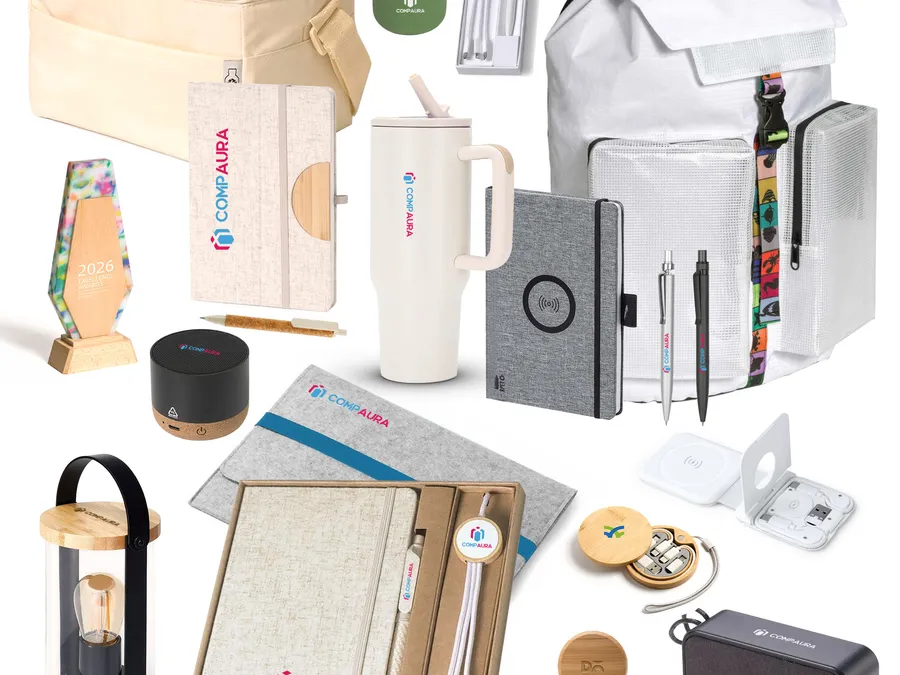
Business Gift Sets
Business gift sets and opening ceremony gifts with your logo — complete branded sets for corporate launches, anniversaries and holiday gifting.

Custom Printed Coffee Cups | Branded Paper Cups with Logo
Custom printed coffee cups with your logo from just 1 piece—food-grade, hot/cold ready, free layout design and fast samples in 1-3 days.
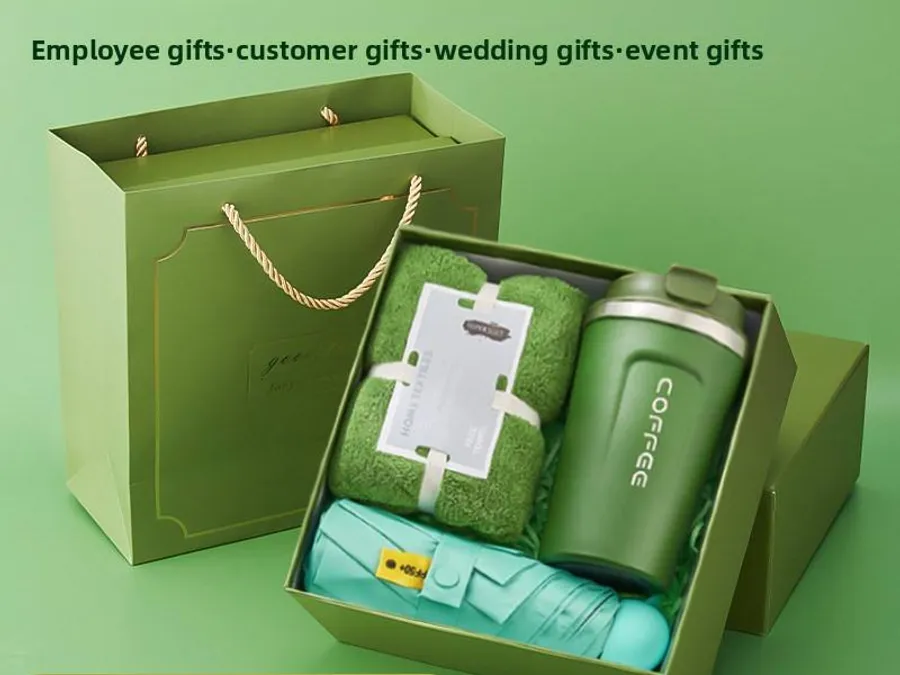
Corporate Gifts
Corporate gifts custom-made with your logo — USB drives, nail clipper sets, notebooks, mugs and more. One-stop corporate gift sourcing with low MOQ.