Custom Mini Fans Manufacturer – Handheld, Neck & Desktop, Logo Printed, 1 pc MOQ
Custom mini fans in ABS and PC with 3 to 6 speed steps, USB or Type-C charging, handheld, neck-hung and desktop modes. 1 pc MOQ, free proof.
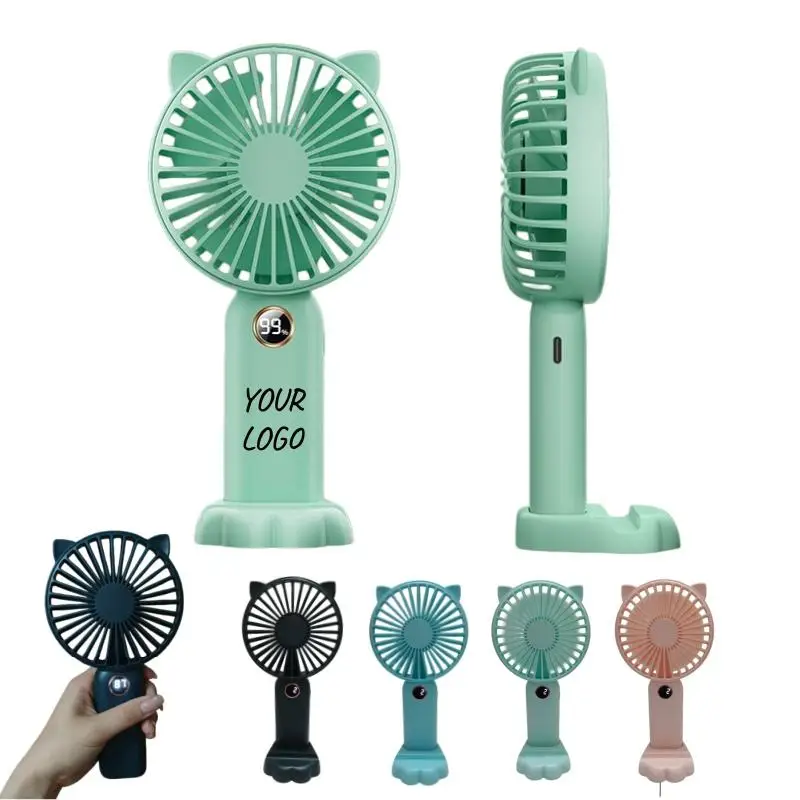
Custom Mini Handheld Fans with Your Logo — USB Rechargeable
Yichi is a custom mini fan manufacturer in Zhejiang, China, producing branded handheld fans in ABS and PC across three body families: handheld units from 160 x 58 x 55.5 mm up to 195 x 90 x 42 mm, neck-hung bodies with a lanyard slot, and foldable formats with a 90° base that stand on a desk. Speed control runs from three or five fixed steps up to a six-step layout and one stepless version; power comes from polymer or 18650 lithium cells charged over USB or Type-C at DC 5V / 1A, and the LED display carries the charge level and the speed step. Logos go on by UV printing or laser engraving. Send a logo, a colour reference or a campaign line and we return a free effect preview before production. A one-piece minimum, samples in 1-3 days and production in 2-10 days apply across the range.
A mini fan is one of the few promotional items that has to earn its place twice over: it must be useful enough to keep, and light enough to carry. Those two requirements pull against each other, and the way a given fan resolves them — how it is held, how many speed steps it offers, and whether the airflow actually reaches the user — is what separates a fan that lives in a drawer from one that goes back in the bag the next morning. The sections below work through the decisions in the order a buyer usually meets them.
Handheld, Neck-Hung, Foldable or Desktop — Choosing the Format
The format question has one honest answer: it depends on how long the fan will be held. A fan that is comfortable for ten minutes is a burden after an hour, and no specification fixes that except a format that takes the hand out of the equation.
Neck-hung. A lanyard runs through a slot at the back of the body and the fan hangs against the chest, angled up at the face. It is hands-free, which is the point, and the weight sits on the neck rather than in the hand. This is the format for people who are standing, talking and working — exhibition staff, marshals, outdoor event crews, tour guides, and delegates who have to carry a bag as well. The source material for this range describes a reduced-load structure intended to make the fan wearable for a full day, which is the specification that matters here rather than airflow.
Handheld. A straight body with the fan head at the top, gripped in one hand. Best for short, directed use: a queue, a bus stop, a walk between buildings, a moment of relief rather than continuous cooling. It is the lightest and the simplest format, and the one with the largest flat face for a logo relative to its size.
Foldable with a 90° base. A hinged body that folds flat for carrying and opens to stand on a desk or a table. Folded, it is a handheld fan; opened, it points upward and takes the weight off the hand entirely. The range includes formats adjustable through about 90°, with the instruction that the base should be turned to reverse the stand direction so that the centre of gravity stays over the base rather than tipping forward — a detail worth knowing before a user props it on a desk.
Desktop with a separate base. Some bodies in the range ship with a base 55.5 mm, 64 x 64 x 16 mm or 70 x 65 x 19 mm, which converts the handheld unit into a standing fan. This is the version for a desk, a bedside table or a counter.
Most formats in this range are described as covering handheld, neck-hung and desktop use from one body, which is the practical answer for a buyer who does not know how the recipient will use the fan. Specify the multi-mode version and the decision is made for you.
Speed Steps: Three, Five, Six or Stepless Control
The speed range is where a cheap fan and a well-specified one diverge most, and the numbers on the box rarely tell you which you have.
Three steps. The simplest control layout, and the easiest to operate one-handed without looking. The risk with a three-step fan is not the top speed but the bottom one: if the lowest setting is already a strong airflow, the fan is unusable at a desk or beside a bed, which is where a personal fan spends most of its life.
Five and six steps. The six-step layouts in this range are described step by step — a soft sleep setting, a natural setting, a fresh setting, a cool setting and a strong setting, plus a simulated natural-wind mode that varies the airflow rather than holding it constant. Having a genuinely low first step is what makes the higher steps usable by comparison; a fan that starts gentle and ends strong covers far more situations than one whose first step is already midway.
Stepless control. One body in the range carries stepless variable speed rather than fixed steps, adjusted by a control that moves continuously. The advantage is that the user lands on exactly the airflow they want instead of the nearest available step. The trade-off is that there is no fixed reference — five clearly marked steps are easier to set by feel in the dark.
A second control worth checking. On the models with an LED display, the screen shows the charge level and the current step, so the user knows both where the fan is set and how much power is left. It is a small feature, but on a rechargeable product it removes the single most common source of user frustration: not knowing whether the fan will last the afternoon.
The airflow design. The parent material for this range describes an enlarged duct with a multi-faceted surround — quoted as an 85 mm duct with a 36-facet surround — intended to spread the airflow rather than concentrate it at a single point. In practice that is the difference between a fan that cools one square centimetre of face and one that cools the whole face.
Battery, Runtime and the Two-Cell Build
Every fan in this range is rechargeable, and the battery specification is where the runtime claims come from.
Cells. The range uses polymer lithium and 18650 cells, with one two-cell version — the source material describes it as a dual-cell arrangement — quoted at a heavier shipping weight to match. Taking the DS68 as the example: 0.19 kg with a single cell and 0.23 kg with two, which is the weight difference the two-cell build adds to the product, and the honest way to read a runtime claim on a fan of a given size.
Runtime. Runtime on this range is quoted at up to 72 hours on a charge. Read that figure correctly: it is a single-charge ceiling quoted at the lowest setting with the display off, and any fan drawing more air at a higher step consumes the same capacity far faster. A fan quoted at 72 hours at its lowest step will not run 72 hours at its highest. What the figure is genuinely useful for is comparing two products of similar size, where the larger cell normally wins.
Charging. Input is DC 5V / 1A over USB, with Type-C bodies in the range. Because the input is standard USB, any source works — a phone charger, a laptop, a car charger, a power bank or a USB socket. Every unit ships with a charging cable. A full charge is a matter of hours rather than overnight, which matters for a two-day event where the fan has to be recharged from a power bank between sessions.
Weight. The lightweight end of the range is quoted at 0.19 kg in a body measuring 188 x 90 x 46.5 mm, with a base 64 x 64 x 16 mm. Weight is the specification that decides whether a neck-hung fan is worn all day or taken off after an hour, and it is worth checking against the intended use before the runtime figure.
The Digital Display, the Aroma Pad and the Details Buyers Notice
Beyond airflow and battery, several features in this range are the ones recipients actually comment on.
The LED display. A screen showing the charge level and the current step. On a rechargeable fan this is the feature that changes how the product is used, because the user can see when to charge rather than discovering the fan is flat when they need it.
The light. Some formats carry a light — a constant blue light on one model, a light that comes on with the first speed step on another, and switchable lighting on others. On promotional fans the light is often as important as the airflow: a lit fan is visible on a table at an evening event, which is a branding advantage as much as a functional one.
The aroma pad. Certain bodies include a slot for a pad onto which a few drops of essential oil are placed, so the airflow carries the scent into the surrounding space. It is a small addition that changes the fan’s position in a catalogue — from a seasonal gadget into a wellbeing item — and it costs nothing in size.
The removable grille. The front grille releases with a counter-clockwise turn and the blades lift out to be washed. The body itself is not washable. On a fan used daily, being able to clear the dust off the blades is the difference between a product that still performs in month six and one that has quietly lost a third of its airflow.
The load-reduction structure. The neck-hung format is built around carrying comfort rather than maximum airflow, which is why the body on that version is shaped to sit against the chest without being felt. It is not a specification that appears on a spec sheet, and it is the first thing a user notices.
UV Printing or Laser Engraving on a Fan Housing
Two branding routes are produced on this range, and the choice follows how much colour the artwork carries.
UV printing lays a full-colour mark onto the flat face of the housing. It carries a multi-colour logo, a photograph, a graphic pattern, a QR code or a campaign line, and it is the route for anything where colour is doing the work. On an ABS or PC body the flat face is the only large printable surface, so artwork is composed to that shape rather than wrapped around the body.
Laser engraving cuts the mark into the housing in a single tone. It does not lift, fade or peel, so it is the route for a mark that has to survive being carried in a bag — a wordmark, a monogram or a short line. A laser mark on a coloured body reads as a tonal shift rather than a colour, which is a deliberate look rather than a limitation of the process.
Also produced on this range: engraved text, and full customisation of the printed content — the source material describes buyers printing campaign copy and promotional text as well as a logo. Where the artwork includes a slogan or a message, send the exact wording; the preview issued before production is the stage at which wording is confirmed.
Where the mark goes. The flat face of the body below the fan head is the primary position on the handheld formats, and the largest printable area. On the foldable and desktop formats the body is shorter and the mark is necessarily smaller.
Specifications
| Attribute | Details |
|---|---|
| Material | ABS, PC and circuit board; quality-grade plastic housing |
| Body formats | Handheld; neck-hung with lanyard slot; foldable with 90° base; desktop with separate base |
| Sizes | 195 x 90 x 42 mm; 188 x 90 x 46.5 mm; 160 x 58 x 55.5 mm; 150 mm high x 77 mm diameter |
| Base sizes | 70 x 65 x 19 mm; 64 x 64 x 16 mm; 55.5 mm diameter |
| Weight | From 0.19 kg (single cell) to 0.23 kg (two cells) |
| Battery | Polymer lithium; 18650 lithium; single-cell and two-cell versions |
| Charging | USB and Type-C; input DC 5V / 1A; cable included |
| Runtime | Up to 72 hours per charge (as quoted, lowest setting) |
| Speed steps | 3, 5 and 6 fixed steps; one stepless version |
| Airflow design | 85 mm enlarged duct with 36-facet surround |
| Display | LED screen showing charge level and speed step |
| Additional features | Light (constant or speed-linked); aroma pad slot; removable front grille; lanyard slot |
| Colours | Deep sea blue, apple green, off-white, purple, green, yellow, white, grey, platinum gold, silver white, starry grey, snow white, cherry pink, dark night green, moon shadow black, glacier white |
| Branding | UV full-colour printing or laser engraving on the housing face |
| Packaging | Colour box |
| Carton | 60 units per carton |
| MOQ | 1 pc |
| Sample Time | 1-3 days |
| Production Time | 2-10 days |
Artwork Requirements
A vector file — AI, EPS, CDR, PSD or PDF — with text converted to curves is the cleanest input. Raster artwork should be sent at the highest resolution available, because the printable face on a mini fan is small and detail that looks acceptable on screen can close up at print size.
Design to the actual face. A logo that fills the flat face of a 195 mm body will not fit the same way on a 160 mm body. Send the artwork against the format you intend to order and the free preview will show the mark at true size on that body.
One tone or many. Decide before artwork is finalised whether the mark is a single-tone engraving or a full-colour print, because the same logo may need adjusting between the two — a fine multi-colour mark that prints cleanly may not read as a single engraved tone.
Colour. Where the logo carries a Pantone reference, send it with the file. Ink on an ABS or PC body reads slightly differently from ink on paper, so a small shift between the on-screen preview and the finished print is normal; where an exact match matters, that is what the sample stage is for.
Where wording is involved. Campaign lines, slogans and printed promotional text should be supplied exactly as they are to appear, including capitalisation and punctuation. The preview confirms the wording and the position; after the preview is approved the artwork is fixed.
Where Branded Mini Fans Get Used
Trade shows and exhibitions. Neck-hung fans worn by stand staff through a full day on a hall floor, and handed out to visitors in a branded carrier. Standing heat is the problem here, and a hands-free format is the only one that solves it.
Outdoor events and sport. Marshals, stewards, queue staff and volunteers at summer fixtures, where the fan is worn on a lanyard and the branding is seen by everyone in the queue rather than only by the wearer.
Corporate and staff programmes. Desk formats issued with the company mark, used at a workstation where the building’s cooling does not reach. The foldable version covers both the desk and the commute, which makes it the more useful of the two for a staff gift.
Travel, tourism and hospitality. Handheld and pocket formats given to guests at a resort, a tour group or a hotel reception, where the item has to be immediately useful and small enough to be taken home.
Retail and channel promotion. Branded fans used as a purchase premium or a seasonal giveaway, printed with the retailer’s mark and a campaign line.
School, campus and community programmes. Fans distributed at summer events, sports days and open days, where the format has to suit a wide age range and the branding has to survive being carried in a school bag.
How an Order Runs
- Send the artwork or the brief. A vector logo file, a colour reference or a description of the setting the fan will be used in.
- Format and step selection. We match the brief to a body format and a speed layout from the range and confirm the charging port.
- Effect preview. A free preview of the mark on the chosen body, at true scale, before anything is produced.
- Sample. Samples run in 1-3 days from confirmed artwork, so the airflow at the lowest step and the carry weight can be checked in person.
- Production. Bulk production in 2-10 days from approval, with function and print checked before packing.
- Packing and shipment. Colour-box packed, cartoned at 60 units per carton.
Why Order From Yichi
A one-piece minimum. One printed fan is enough to judge the airflow at the lowest step, the print position and the carry weight — which is what a campaign order actually turns on.
A free preview before production. Because a custom-printed fan carries your artwork and cannot be resold, the preview stage does the work that a returns policy cannot. Use it — including on a single unit.
Three body modes from one fan. The formats in this range cover handheld, neck-hung and desktop use, so the buyer does not have to guess how the recipient will use the product.
A bottom speed that is genuinely gentle. The six-step layout starts at a sleep setting rather than at a strong airflow, which is the specification that decides whether the fan is used at a desk or put away.
Fast turnaround on both ends. Samples in 1-3 days and bulk production in 2-10 days from confirmed artwork.
Tell us where the fan will be used — a stand, a desk, a queue or a summer event — and we will recommend the format and return a free effect preview. Request a quote or send your artwork directly and we will come back with a recommendation and a proof.
Frequently Asked Questions
What is the MOQ for custom mini fans?
Handheld, neck-hung or desktop — which format should I choose?
How many speed steps do the fans have?
How long does the battery last on one charge?
How do the fans charge, and can they be charged from a power bank?
Is the fan housing printable all the way round?
Can the grille be cleaned?
What artwork file do you need?
You May Also Need
Custom Printed Balloons – Free Design & Bulk
Custom printed balloons with free design & 1-on-1 support. MOQ of just 1. Silk-screen logo printing on 230 colors. CE-certified quality for promotions & events
Business Gift Sets
Business gift sets and opening ceremony gifts with your logo — complete branded sets for corporate launches, anniversaries and holiday gifting.
Custom Printed Coffee Cups | Branded Paper Cups with Logo
Custom printed coffee cups with your logo from just 1 piece—food-grade, hot/cold ready, free layout design and fast samples in 1-3 days.
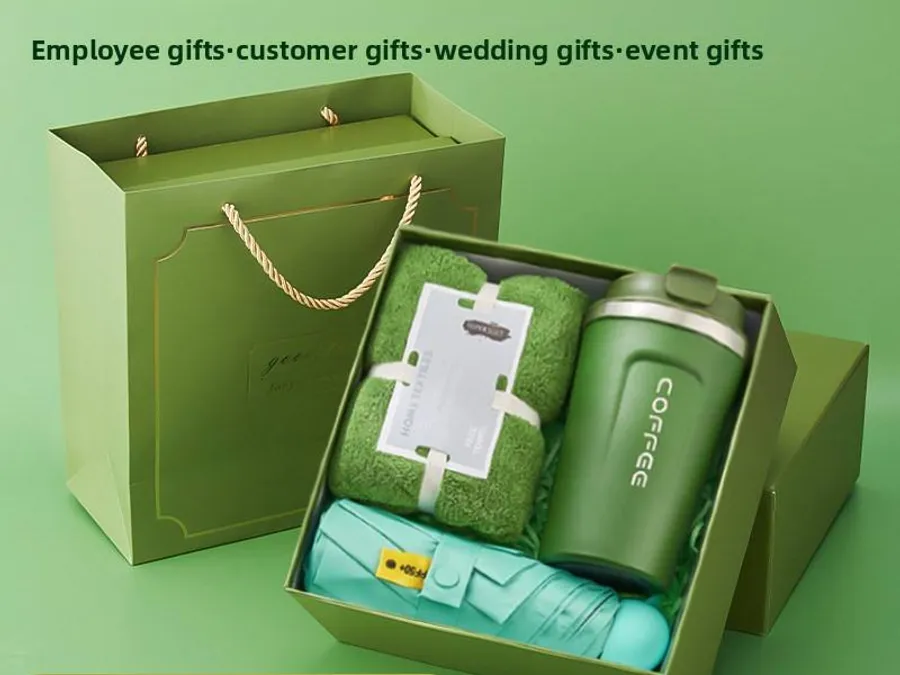
Corporate Gifts
Corporate gifts custom-made with your logo — USB drives, nail clipper sets, notebooks, mugs and more. One-stop corporate gift sourcing with low MOQ.