Custom Puzzle Cubes Manufacturer – 2x2 to 5x5, Pyraminx & Megaminx, Six-Face Print, 1 pc MOQ
Custom puzzle cubes printed on all six faces — 2x2 to 5x5, Pyraminx, Megaminx and infinity cubes in ABS, UV printed or laser engraved. 1 pc MOQ, free proof.
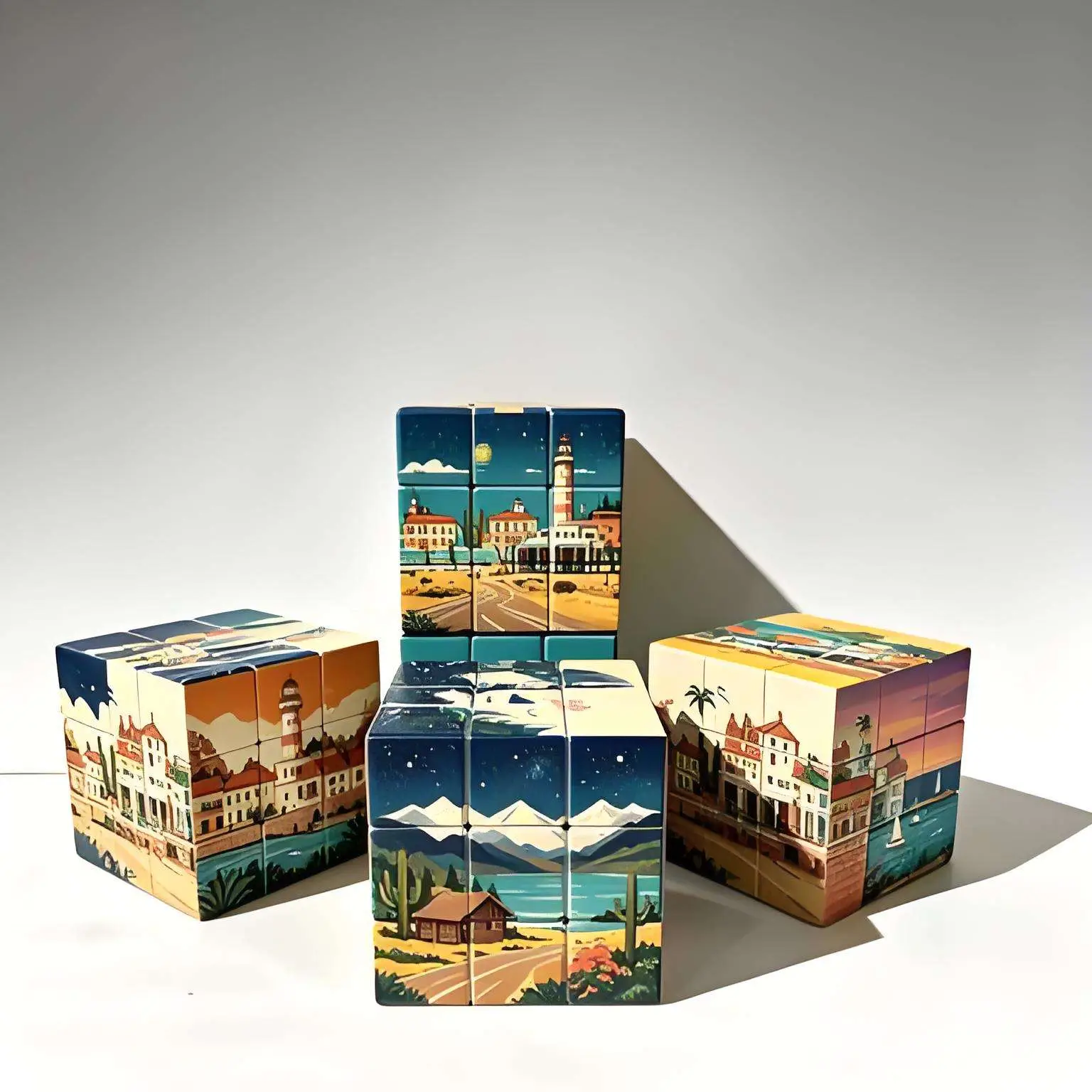
Custom Puzzle Cubes with Your Logo on All Six Faces
Yichi is a custom puzzle cube manufacturer printing promotional cubes in Zhejiang, China — 2x2 to 5x5, Pyraminx, Megaminx, infinity cubes and keyring cubes — with UV colour printing or laser engraving on one face or all six. Send artwork, a logo, a QR code or a photograph and we return a free effect preview before anything is printed. A one-piece minimum, samples in 1-3 days and production in 2-10 days apply across the whole range, so a single commemorative cube and a 5,000-piece conference giveaway run through the same process.
A cube is an unusual promotional item because it is handled rather than displayed. It sits on a desk half-turned, gets picked up during a call, and travels between offices before it is eventually taken home. Six faces means six impressions rather than one, and the dwell time is measured in weeks rather than the few seconds a flyer gets. That is the commercial argument for the product; the engineering argument is whether the print survives being twisted.
What You Can Print on a Cube
The cube body is ABS, moulded in solid colour rather than sprayed, so the surface resists friction and does not scrape white at the edges. Printing runs directly onto that surface.
Logo. The most common order, and the one that has to survive being read at arm’s length on a moving object. Solid marks and clean letterforms reproduce best.
Text. Campaign lines, dates, event names, contest answers, a set of instructions split across faces.
QR code. Printed at a size that still scans after the cube has been handled. Because a QR code is a functional mark rather than a decorative one, send it as a vector file and give the code as much of the face as the design can spare.
Photograph or portrait. Images are reproduced from the file you send, which is why the resolution instruction below matters more on cubes than on flat print.
Different artwork per face. Six identical faces is the simplest order; six different faces lets the artwork build, so that turning the cube reveals a sequence. Designers use this to run a campaign message across the six sides.
Full-Wrap Print or Sticker-Style Panels
Two finish routes are produced on the same cube body, and the choice changes how the product ages.
Full-wrap print — sometimes described as a full-panel print — carries the design across the print area of each face with the colour bonded to the plastic. It is the route for photographic artwork, gradients, portraits and full-colour brand design, and it is the finish that keeps its appearance through handling because there is no film layer that can lift at a corner.
Sticker-style panels reproduce the look of the classic applied-label cube: the design sits as a defined panel on each face. It is a familiar, graphic look and it is straightforward to lay out, but a panel edge is a place where dirt collects and where lifting starts on any cube that is actually used.
For a giveaway that will be turned thousands of times, the wrap print outlasts a panel. For a product that is decorative, either is defensible — the difference is visible after a year on a desk, not on the day it arrives.
UV Printing, Laser Engraving or Heat Transfer
Three marking methods are used on cubes here, and the choice is driven by the artwork and the quantity rather than by preference.
UV colour printing. The working method for colour. Six faces come out in solid colour with a clear pattern, the ink cures instantly under the lamp, and the finished surface resists scratching and does not fade. The pigment is an environmental grade with no formaldehyde and no odour. Because UV printing needs no printing plate, there is no plate fee and no minimum quantity attached to the setup — which is why a one-piece order is possible at all.
Laser engraving. Cuts the mark into the material instead of laying ink on it, so the line is crisp and cannot peel. It works on both blank white and coloured cubes. Choose it when the logo is a single-colour mark or a fine line drawing and the long-term look of the mark matters more than full colour. Note that engraving is a subtractive process: it reads as a texture change, not as a colour change, so it does not reproduce a multi-colour logo.
Heat transfer. A route used elsewhere in the trade, normally described as a newer process. It carries colour well but the process is complex and a plate fee applies, which raises the effective cost of a small run.
Adhesive stickers. Applied by hand, and the slowest of the four options in lead time. It survives on a decorative cube; it is the weakest choice for a cube that gets used.
Blank White Cubes or Coloured Cubes
The material the cube is moulded in decides what reads well on it.
Blank white cubes take artwork best. A white body gives the print a neutral base, so photographic images, illustrations and multi-colour designs come out at full strength. This is the version to choose for printed patterns, photographs and portraits.
Coloured cubes are moulded in the finished body colour, and the conventional use is a company logo — a strong single mark against a solid ground, which is why corporate orders tend to select this version. Full-colour photographic artwork on a coloured body is possible, but the body colour sits behind the print and changes how the image reads.
Transparent 3x3 cubes are also produced, for buyers who want the mechanism visible.
Cube Formats from 2x2 to 5x5 and the Shapes Beyond Them
The range is not limited to the standard cube. It runs from a 19 mm keyring piece to a 100 mm display cube, and includes the non-cubic shapes.
| Format | Cube size |
|---|---|
| 1x1 keyring, blank | 19 x 19 x 19 mm |
| 3x3 keyring, blank | 30 x 30 x 30 mm |
| Infinity cube, blank | 40 x 40 x 40 mm |
| 2x2, solid, blank | 49.6 x 49.6 x 49.6 mm |
| 2x2, hollow, blank | 49.6 x 49.6 x 19.6 mm |
| 3x3, solid, blank | 56.47 x 56.47 x 56.47 mm |
| 3x3, hollow, blank | 55.6 x 55.6 x 55.6 mm |
| 3x3, mid-size, solid, blank | 69.6 x 69.6 x 69.6 mm |
| 3x3, large, solid, blank | 99.6 x 99.6 x 99.6 mm |
| 3x3, coloured | 55.6 x 55.6 x 55.6 mm |
| 3x3, mid-size, coloured | 69.6 x 69.6 x 69.6 mm |
| 3x3, large, coloured | 99.6 x 99.6 x 99.6 mm |
| 4x4, hollow, blank | 61.6 x 61.6 x 61.6 mm |
| 5x5, hollow, blank | 62.6 x 62.6 x 62.6 mm |
| Pyraminx, blank | 95.0 x 85.0 x 95.0 mm |
| Megaminx, blank | 85.0 x 85.0 x 70.0 mm |
| Pen-holder cube, blank | 95.0 x 95.0 x 95.0 mm |
Two notes on the range. The 3x3 is the workhorse — it is the shape a buyer pictures when they order a puzzle cube, and the one with the widest choice of body colour and size. And a printed 3x3 is noticeably harder to solve than a colour-block cube, because the artwork removes the colour cues that make the last layer readable. That is a feature rather than a fault for a commemorative piece: it is a puzzle again, not a decoration that happens to turn. Buyers who want the item to be solved rather than shelved should know it before they choose the design.
Dimensions are hand-measured and carry a 1-2 mm tolerance. Where a cube sits at the boundary of a display stand, a gift box compartment or a printed insert, allow for that figure.
Round figures are also quoted in the trade for the same parts — a standard 3x3 is often given as 5.6 cm or 5.7 cm and a 4x4 as 6.2 cm, and the mid-size 3x3 as 7 cm. Those are the same cubes measured to a different tolerance rather than different products, so a buyer comparing a 5.7 cm quotation against a 56.47 mm drawing is looking at one part.
Specifications
| Specification | Details |
|---|---|
| Product type | Custom-printed puzzle cubes: 1x1 and 3x3 keyring, infinity cube, 2x2, 3x3, 4x4, 5x5, Pyraminx, Megaminx, pen-holder cube, transparent 3x3 |
| Body material | ABS, solid colour through the moulding, friction and scratch resistant, smooth turning feel |
| Printing | UV colour printing on one face or all six; full-wrap print or sticker-style panels |
| Marking alternatives | Laser engraving on blank white and coloured cubes; heat transfer and adhesive stickers available in the trade |
| Ink | Environmental-grade pigment, instant cure, no formaldehyde, no odour; scratch resistant and colour-fast |
| Design coverage | Six-face customisation, single-face logo, different artwork per face |
| Customisable content | Logo, text, QR code, image, portrait, pattern |
| Custom sizes | Available on request |
| Size tolerance | Hand-measured, 1-2 mm |
| Colour tolerance | Colour difference held within 10% |
| Packaging | Transparent acrylic display box, paper box or gift box; custom packaging available |
| Order process | Artwork received, free effect preview issued, design confirmed, production, delivery |
| MOQ | 1 pc |
| Sample time | 1-3 days |
| Production time | 2-10 days |
| Return policy | Custom-printed cubes cannot be returned after production is confirmed |
Artwork Requirements, Colour Matching and Tolerances
Vector first. Send a complete vector file — AI, PDF, EPS or CDR — with the text converted to curves, so nothing depends on a font being installed at this end. A PS file is also accepted. Where a raster file is the only version that exists, send it at no less than 300 pixels resolution; on JPG files the general rule is that a larger pixel count gives a sharper print, and the difference is visible on a face only 50 mm across.
Square artwork is safe. A square file is reproduced without cropping. A rectangular file is cropped to fit the face, and anything outside the square is lost — so a design with a caption along the bottom edge should be re-laid out square before it is sent. This single point causes more rework on cube orders than any other.
Colour. A monitor produces colour in RGB from red, green and blue light, and the same file shows differently on a different screen. The printed cube therefore cannot match an on-screen colour exactly. The working tolerance is a colour difference held within 10%, which is the figure the trade works to, and it is worth knowing before a brand colour is specified to four decimal places. Send a physical swatch or a Pantone reference and it is matched against that rather than against a screen.
Turning feel. A cube that will be solved needs a mechanism that moves freely; a cube that will be displayed does not. Say which one the order is, because the two are built and checked differently.
Where Printed Cubes Get Used
Corporate and brand gifting. An anniversary cube, a product-launch piece, a set of six faces telling a campaign story. The cube is the item that stays on the desk after the other giveaways have gone into a drawer.
Employee and welfare gifting. A company-logomarked cube for a staff event, where the low unit cost of the smaller formats allows a cube for every desk.
Trade shows and exhibitions. A small format that travels well, costs little to ship, and carries a QR code straight to a landing page. The 3x3 keyring and the standard 3x3 are the usual picks.
Graduation and school orders. A commemorative piece for a leaving class or a school anniversary, printed six ways so the design reads as a whole.
Institution and association orders. Regional gift items, association anniversaries, museum and visitor-centre pieces.
Retail and resale. Buyers who need a printed cube in retail packaging, with the acrylic display box used as the shelf presentation.
Building a wider programme? The same artwork can be carried onto promotional gifts — printed keyrings, wristbands, bags and accessories — so a campaign is produced from one supplier and one design file rather than assembled from several.
How an Order Runs
Four steps, and nothing is printed until you have seen the artwork rendered on the cube.
- Send the artwork — the vector file, or the highest-resolution raster version available, with a note of what should appear on each face.
- Receive the free effect preview. The artwork is laid onto the cube and returned as a visual, so the wrap, the crop and the position are all visible before production. Ask for changes here; this is the stage where changes cost nothing.
- Confirm and pay. The order goes into production against the confirmed preview.
- Production and delivery. Stock formats run on the published lead time; a custom size adds tooling time and is quoted separately.
Two points are worth settling first. Because a cube printed with your artwork cannot be resold, it is not returnable once production is confirmed — the preview is the whole of your review stage, and it is worth spending time there even on a single piece. And the finish decision (wrap print against panel print, engraving against UV colour) should be made before the preview, not after, because the two finishes render differently on screen.
Why Order From Yichi
We print cubes on our own machines rather than buying them in, and that is what makes a one-piece order possible: the UV process needs no plate, so there is no setup cost that has to be amortised across a large run. A buyer can order a single cube, hold it, turn it, check the print against the brand colour in daylight, and only then place the order that matters.
Four things follow from running the process in-house. Bulk pricing that scales — the per-unit cost falls as quantity rises, and the low minimum means the first order does not have to be the big one. Inspection — buyers are welcome to visit the factory and inspect production, and orders can be arranged for third-party inspection. Confidentiality — artwork handled for a company order is not reused for anyone else. Proofing support — free effect previews, free design assistance, sample proofing, and samples that can be posted out before a production order is placed.
Send the artwork, the format you want and the quantity through the contact page and we will come back with a quote, a size recommendation and a free effect preview.
Frequently Asked Questions
What is the MOQ for custom puzzle cubes?
Which cube formats can be printed?
Can the six faces carry different designs?
What artwork do you need?
How much colour difference should I expect?
Can I get a proof before production, and what about returns?
You May Also Need
Custom Printed Balloons – Free Design & Bulk
Custom printed balloons with free design & 1-on-1 support. MOQ of just 1. Silk-screen logo printing on 230 colors. CE-certified quality for promotions & events
Business Gift Sets
Business gift sets and opening ceremony gifts with your logo — complete branded sets for corporate launches, anniversaries and holiday gifting.
Custom Printed Coffee Cups | Branded Paper Cups with Logo
Custom printed coffee cups with your logo from just 1 piece—food-grade, hot/cold ready, free layout design and fast samples in 1-3 days.
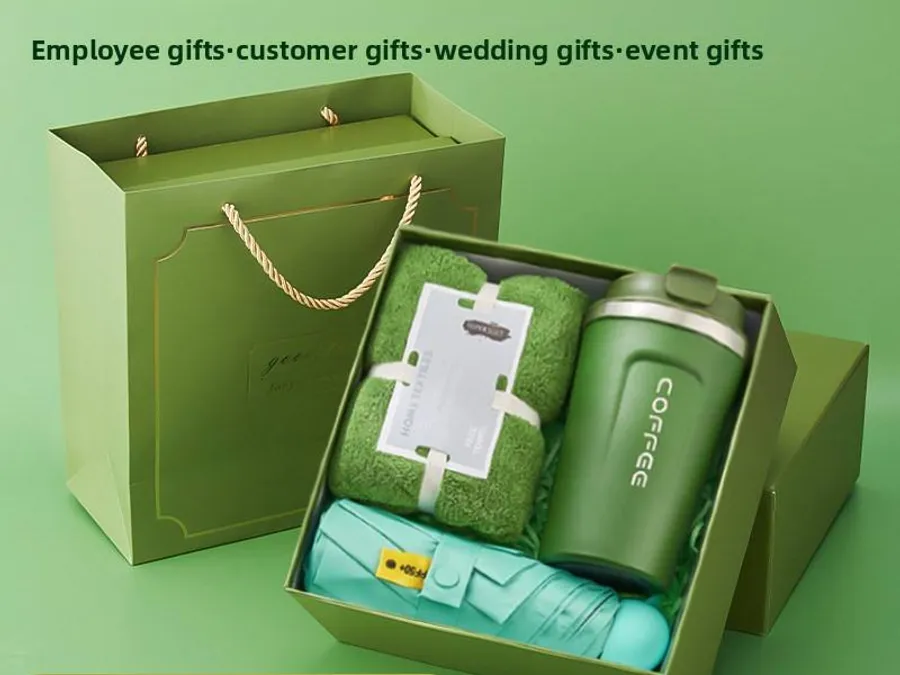
Corporate Gifts
Corporate gifts custom-made with your logo — USB drives, nail clipper sets, notebooks, mugs and more. One-stop corporate gift sourcing with low MOQ.